
Different Types of Bathroom Tiles — Floor, Wall and Shower Specification
A bathroom is the one room where getting the tile wrong is a safety problem rather than an aesthetic one. Wet porcelain, bare feet and a hard floor is an unforgiving combination, so the type of bathroom tile — and its slip rating — matters more than anything else on the specification.
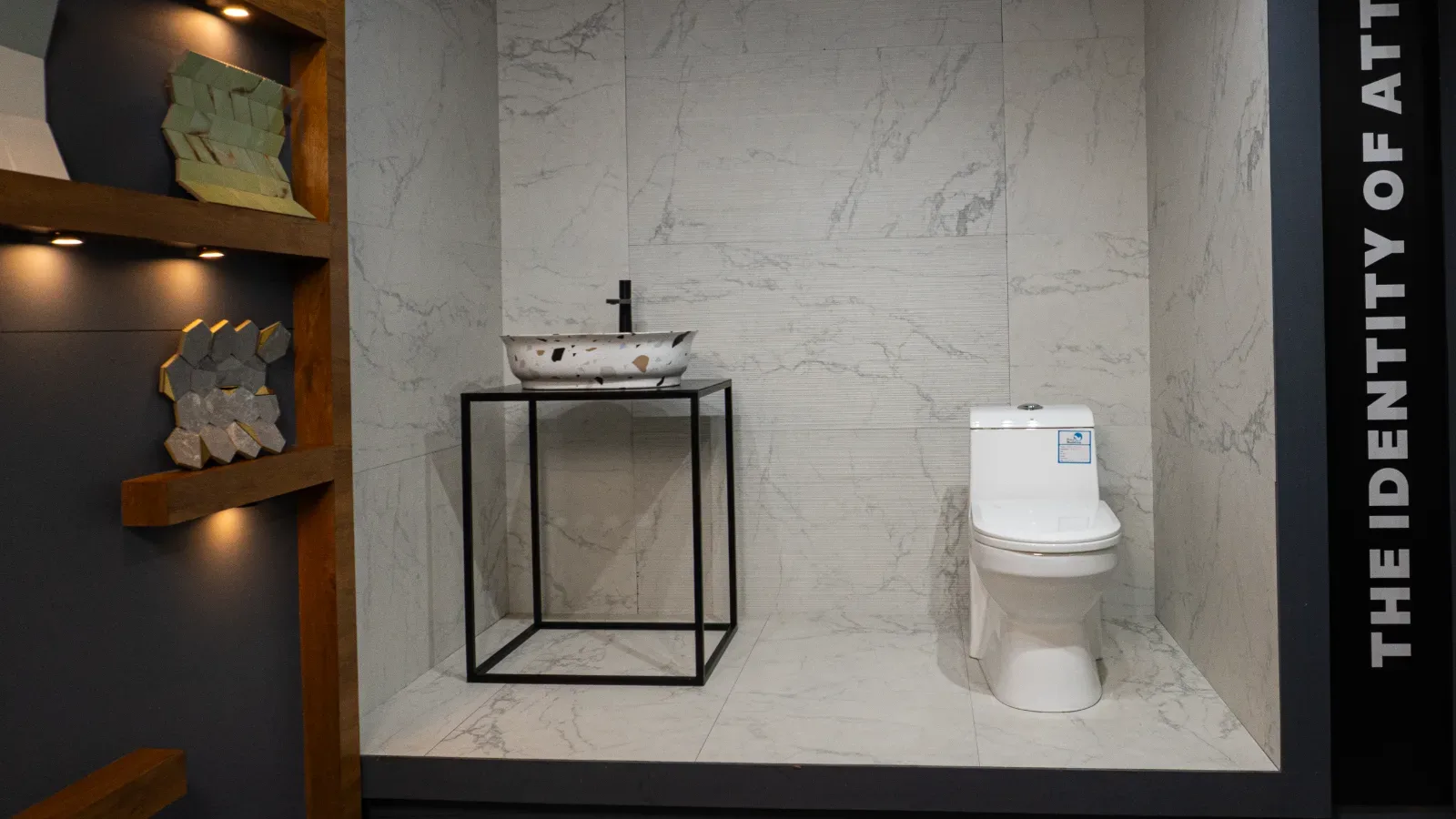
Floor first: slip rating is the specification
Specify a minimum of R10 for a bathroom floor and R11 for a shower floor or a wet room. These ratings are measured on a lubricated ramp, which is the relevant condition — almost any tile grips well dry. A polished PGVT looks superb in a bathroom showroom and is genuinely dangerous once someone steps out of a shower onto it.
Smaller tiles help on a shower floor, and not only for grip. A shower tray area needs a fall towards the drain of around 1 in 50, and you cannot build a fall into a large rigid tile. Mosaics or 100 mm to 300 mm tiles let the setter follow the slope. The extra grout lines are a bonus here rather than a compromise: grout is a much higher-friction surface than glaze.
Everywhere else in the bathroom, larger is better. Fewer grout lines means less to clean, fewer places for mould, and a floor that reads as a continuous surface rather than a grid — which makes a small bathroom look larger, not smaller. The advice that small rooms need small tiles is simply wrong.
What to specify
Bathroom Floor
- 600x600 or 600x1200 mm
- Textured matt GVT
- R10 minimum
- Rectified for narrow joints
Shower Floor
- 100-300 mm or mosaic
- R11 textured
- Laid to a 1:50 fall
- Matching wall decor
Bathroom Walls
- 600x1200 mm or larger
- Gloss PGVT or matt GVT
- Slip rating not relevant
- Full-height for a seamless look
Details
- Matching skirting
- Niche and shelf tiles
- Mitred external corners
- Coordinated sanitary ware
Bathroom detailing that prevents callbacks
- Tank before you tile — tiles and grout are not a waterproof layer. A wet area needs a membrane behind the tile, taken up the walls and into the tray.
- Silicone the internal corners — wall-to-wall and wall-to-floor junctions move. Grout there will crack; a flexible sealant will not.
- Use an epoxy grout in the shower — it does not absorb water and will not discolour or grow mould the way cementitious grout does.
- Mitre the external corners — a mitred porcelain corner reads far better than a plastic trim, and on a full body tile the joint is invisible.
- Plan the tile layout around the fittings — set out so cut tiles fall at the least visible edge, not beside the basin.
- Order sanitary ware with the tiles — shipping them in the same container cuts the freight cost per unit substantially.
Different types of bathroom tiles
| Tile type | Where it goes | Why choose it |
|---|---|---|
| Ceramic wall tiles | Walls, dry and wet | Light, easy to cut, glossy and easy to wipe; never on floors |
| Anti-skid matt vitrified | Bathroom and shower floors | R10-R11 wet grip, absorbs almost no water |
| GVT (glazed vitrified) | Floors and walls | Marble, stone and concrete looks in matt or satin |
| PGVT (polished glazed vitrified) | Walls only in wet areas | High gloss reflects light; too slippery for a wet floor |
| Mosaic tiles | Shower floors, niches, feature strips | Follows floor falls; many grout lines add grip |
| Full body vitrified | Heavy-use and commercial washrooms | Colour through the tile hides chips and wear |
| Marble-effect tiles | Feature walls and floors | The marble look without etching or sealing |
| Wood-effect tiles | Floors and feature walls | Warm look that water cannot damage |
| Subway and highlighter tiles | Walls and bands | Pattern and texture on one wall or at eye level |
| Large-format slabs | Walls and vanity counters | Almost no grout lines to clean |
Budget small bathroom ideas · Difference between floor and wall tiles
Frequently asked questions
What slip rating should a bathroom floor tile have?
R10 as a minimum for the main bathroom floor, and R11 for a shower floor or a wet room. The rating is measured wet on a ramp, so a tile that feels secure dry in a showroom can still be unsafe underfoot.
What size tiles suit a small bathroom?
Larger than most people expect. A 600x600 mm or 600x1200 mm tile with narrow rectified joints gives a continuous surface that makes the room read as bigger. Keep small formats for the shower floor, where you need the grout lines for grip and the flexibility for the fall.
Can I use the same tile on the floor and the walls?
Usually yes, and it looks excellent — but check the slip rating. Many wall tiles are polished and are not safe underfoot. The better approach is one decor produced in two finishes: gloss for the walls, textured for the floor.
Do bathroom tiles need sealing?
Porcelain does not — the body is too dense to absorb water. Cementitious grout does, or better, use an epoxy grout in wet areas and skip sealing altogether.
What are the different types of bathroom tiles?
Ceramic wall tiles, anti-skid matt vitrified floor tiles, GVT and PGVT, mosaic, full body vitrified, marble-effect, wood-effect, subway and highlighter tiles, and large-format slabs. Use textured vitrified tiles on the floor and any of them on the walls.
Which type of tile is best for a bathroom floor?
A matt or textured vitrified tile rated R10 or higher — R11 in the shower. It absorbs almost no water, grips when wet and does not stain. Mosaic or small tiles work best on a shower floor that slopes to a drain.
Request bathroom tile and sanitary ware pricing
We ship tiles and sanitary ware in one container, which brings the landed cost per unit down considerably.
Browse the full range
Buying Guides
- Tile Buying Guide
- Full Body vs GVT Tiles
- Step & Riser Tiles Guide
- GVT vs PGVT
- Tile Size Guide
- Laminate Guide
- Porcelain vs Ceramic Tiles
- What Are Vitrified Tiles
- Types of Tiles
- Tile Thickness Guide
+21 more
- Glossy vs Matte Tiles
- How to Clean Tile Floors
- How to Remove Tile Stains
- How to Fix Cracked Tiles
- How to Clean Marble Floors
- Bathroom Size Guide
- Powder Room Guide
- Epoxy Flooring vs Tiles
- Wall Tiles vs Floor Tiles
- Small Bathroom Ideas on a Budget
- How to Clean Kitchen Tiles
- How to Remove Tile Scratches
- Floor Tile Border Designs
- Indian Flooring Tiles
- Indian Toilet Bathroom Design
- Kitchen Dado Tiles
- Wash Basin Counter Design
- Flush Valve vs Flush Tank
- Wall vs Floor Mounted Toilet
- Portico Design
- Outside Stairs Design