
Double Charged Vitrified Tiles for High-Traffic Floors
Double charged tiles sit exactly where most commercial projects need them to: a decorative layer twenty times deeper than a printed glaze, at roughly two-thirds the cost of full body porcelain. For offices, showrooms, corridors and lobbies, it is usually the right economic answer.
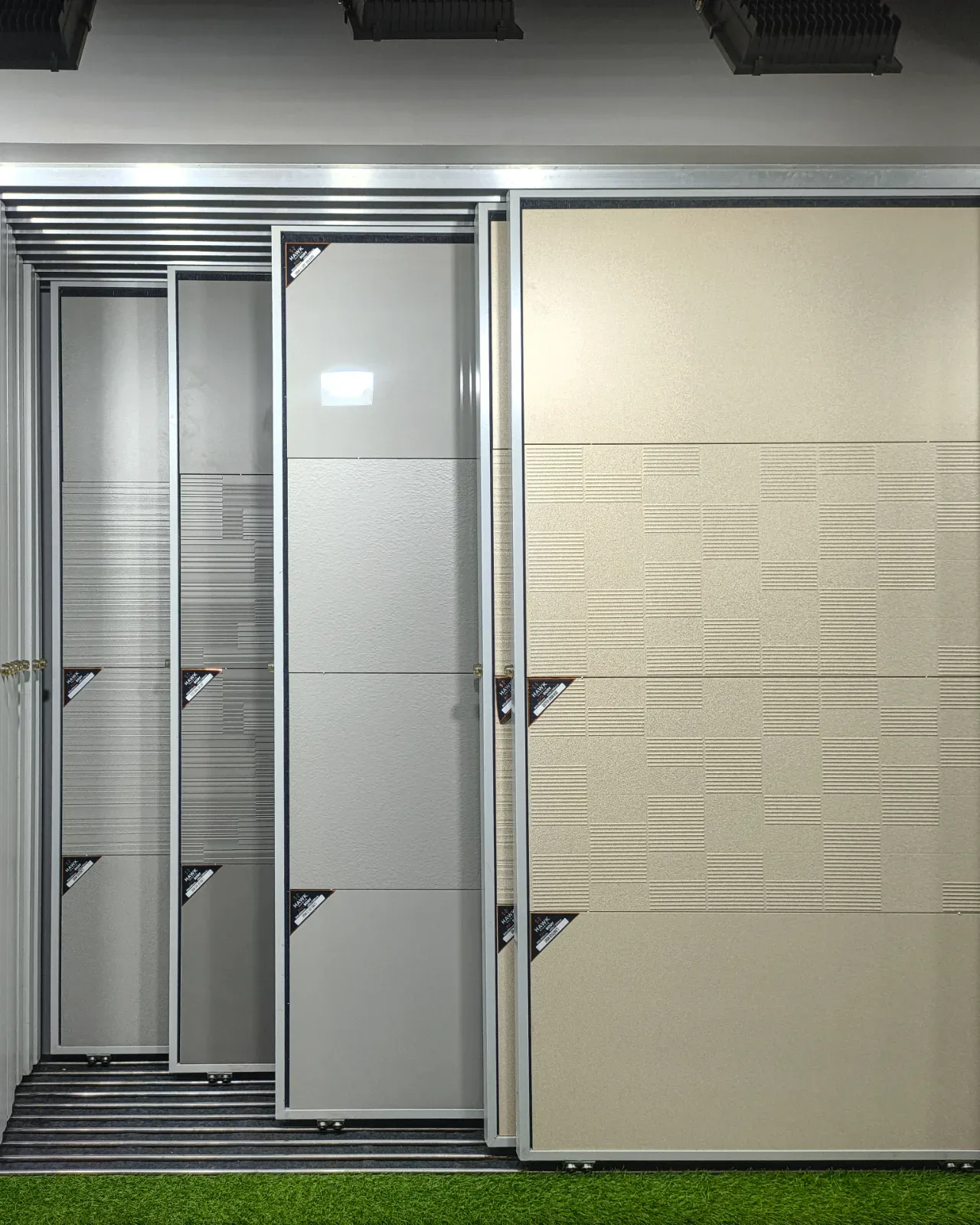
- 3-4 mm double-pressed decorative layer
- Polished, matt and honed finishes
- Strong value per square metre over large floor areas
How a double charged tile is made
Two hoppers feed the press instead of one. The first lays down the base body — plain, unpigmented, and the bulk of the tile. The second lays a pigmented decorative powder on top of it, three to four millimetres deep. The press then compacts both together in a single stroke at very high pressure, so the two fuse into one body before firing rather than being bonded afterwards.
The result is a tile whose visible surface is a solid pressed material, not a coating. That is the whole point: a printed glaze is measured in fractions of a millimetre, so once it abrades the tile is finished. Three to four millimetres of pigmented body will outlast the building in almost any commercial setting.
The limitation is the same one full body has, and for the same reason. Because the pattern comes from powder distribution rather than from printing, the design range is restricted to solid colours, salt-and-pepper granite effects and simple directional patterns. No double charged tile will convincingly imitate marble veining — for that you need GVT.
Compare with full body tiles · GVT & PGVT for design-led work
Specification
Sizes
- 600x600 mm
- 800x800 mm
- 600x1200 mm
- 1000x1000 mm to order
Finishes
- Polished
- Matt
- Honed
- Anti-skid
Patterns
- Salt and pepper
- Granite effect
- Solid colour
- Directional / linear
Performance
- 3-4 mm decorative layer
- Water absorption < 0.5%
- PEI IV surface rating
- Suited to heavy commercial traffic
Where double charged is the right call
- Office floors — large areas, steady footfall, and a requirement that the floor still looks new in ten years.
- Showrooms and retail — consistent appearance across a wide open area matters more than pattern variety.
- Corridors and lobbies — concentrated traffic in a narrow band, which is exactly what wears a printed glaze through.
- Schools and institutional buildings — heavy use, constrained budget, long replacement cycle.
- Car showrooms and workshops — polished double charge handles vehicle tyre traffic that would mark a glazed floor.
- Large residential projects — developers specifying one durable floor across hundreds of units.
Frequently asked questions
What does double charged mean?
Two layers of powder are fed into the press together — a plain base body and a 3 to 4 mm pigmented decorative layer — and compacted in one stroke at very high pressure. The decorative layer is a solid pressed material many times thicker than the print on a glazed tile.
Where are double charged tiles typically used?
Showrooms, offices, lobbies, corridors, schools and other large commercial floors, where a consistent look across a wide area matters and foot traffic is high.
Is double charged better than full body?
Not better, cheaper for most jobs. Full body has no layer boundary at all and is the correct specification for the very heaviest traffic. Double charged gives you 3 to 4 mm of wearable decorative material, which is more than any commercial floor will ever use, at a noticeably lower price per square metre.
Can double charged tiles be used outdoors?
In a matt or anti-skid finish, on a covered or lightly exposed area, yes. Polished double charge should not go outdoors. For open terraces, driveways and poolsides specify a dedicated outdoor body instead.
Do double charged tiles need polishing after installation?
No. They arrive finished. On very large floors some contractors do a light post-installation polish to level any lippage between tiles, but that is a flatness correction, not a requirement of the product.
Request double charged tile pricing
Send the floor area and finish you need. We will quote per square metre and per container, with shade samples.
Browse the full range
Buying Guides
- Tile Buying Guide
- Full Body vs GVT Tiles
- Step & Riser Tiles Guide
- GVT vs PGVT
- Tile Size Guide
- Laminate Guide
- Porcelain vs Ceramic Tiles
- What Are Vitrified Tiles
- Types of Tiles
- Tile Thickness Guide
+21 more
- Glossy vs Matte Tiles
- How to Clean Tile Floors
- How to Remove Tile Stains
- How to Fix Cracked Tiles
- How to Clean Marble Floors
- Bathroom Size Guide
- Powder Room Guide
- Epoxy Flooring vs Tiles
- Wall Tiles vs Floor Tiles
- Small Bathroom Ideas on a Budget
- How to Clean Kitchen Tiles
- How to Remove Tile Scratches
- Floor Tile Border Designs
- Indian Flooring Tiles
- Indian Toilet Bathroom Design
- Kitchen Dado Tiles
- Wash Basin Counter Design
- Flush Valve vs Flush Tank
- Wall vs Floor Mounted Toilet
- Portico Design
- Outside Stairs Design