
Full Body Vitrified Tiles — 600x1200, 600x600 & 800x800
A full body tile is pressed from one homogeneous mix, so the colour and the material are identical from the wearing surface to the base. Nothing can wear through to a different layer, which is why full body porcelain is what gets specified when a floor has to survive decades of traffic rather than years.
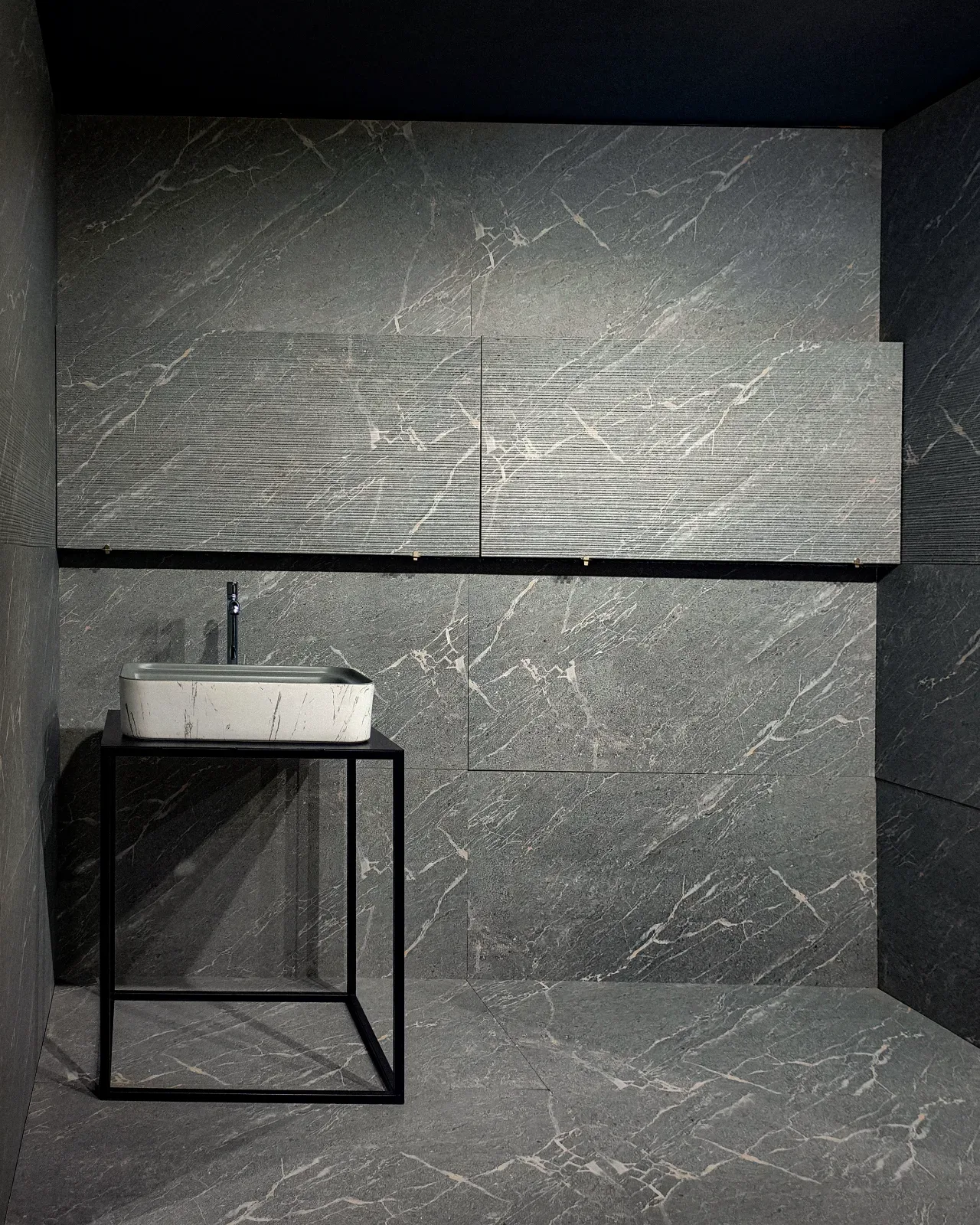
- Colour and body identical through the full thickness
- Deep abrasion resistant — rated for heavy commercial traffic
- Water absorption below 0.5%, frost resistant
Technical specification
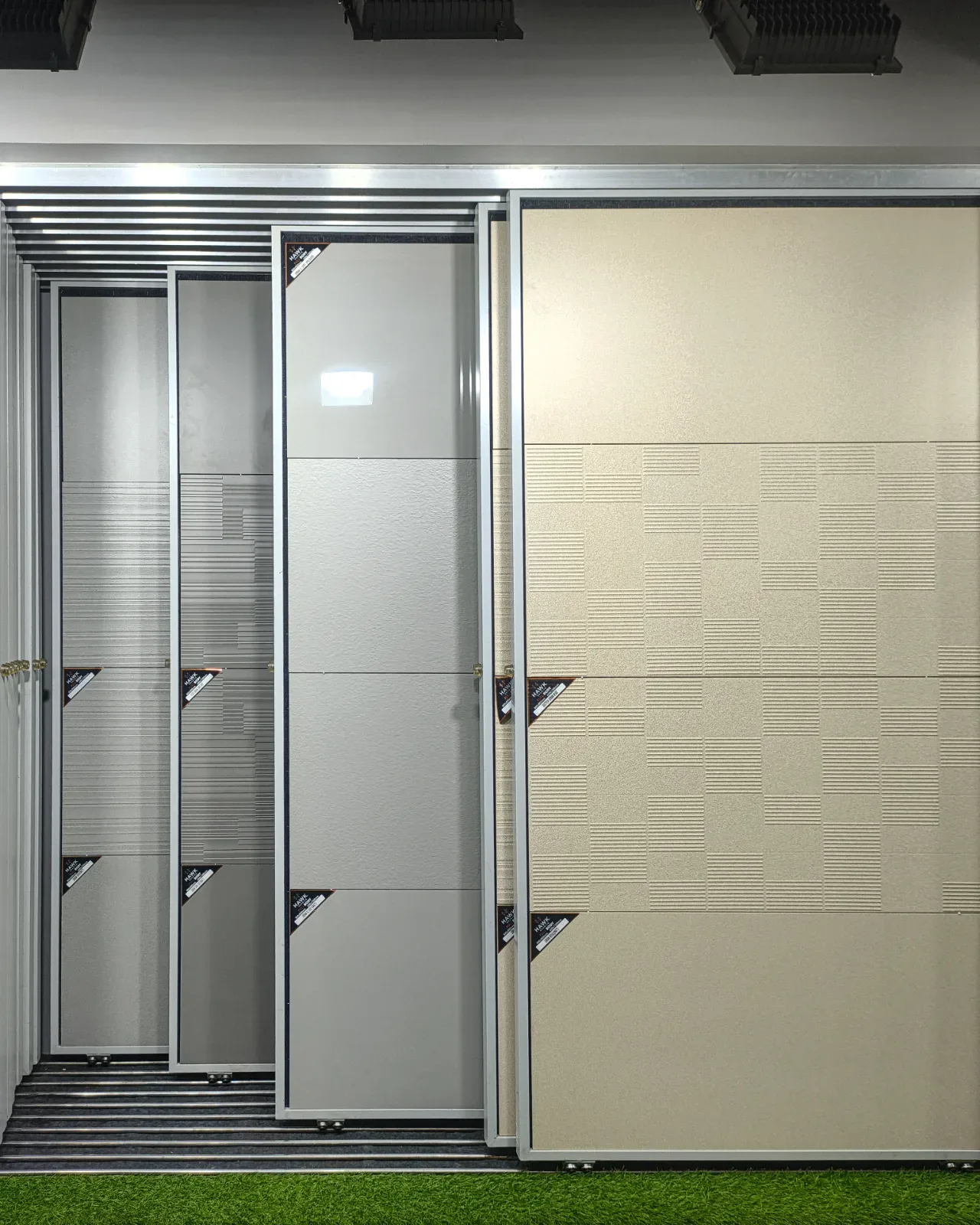
Sizes
- 600x600 mm (2x2 ft)
- 600x1200 mm (2x4 ft)
- 800x800 mm
- 300x1200 mm
- Custom sizes to order
Thickness
- 9 mm standard
- 10 mm and 12 mm
- 15 mm for industrial floors
- 20 mm outdoor pavers
Finishes
- Matt
- Unglazed natural
- Honed
- Anti-skid textured
- Rustic / carving
Performance
- Water absorption < 0.5%
- Breaking strength > 1300 N
- Deep abrasion resistant
- Frost and stain resistant
- Chemical resistant
What "full body" actually means
Most decorated tiles are built in layers. A glazed tile carries its pattern in a thin coating fired onto a plain base; a double charged tile carries it in a pressed layer three to four millimetres deep. Both are durable, but both have a boundary: grind far enough through the surface and you reach a material that looks nothing like the face of the tile.
Full body has no such boundary. The pigment is blended into the whole body before pressing, so a cross-section through the tile is the same colour as its face. The practical consequence shows up at edges and corners. A dropped trolley that chips a stair nosing, a drill that skids across a threshold, thirty years of grit under a doorway — on a full body tile all of these expose more of the same material, and the damage stays close to invisible.
That property is also why full body tiles can be mechanically finished on site. Edges can be ground to a bullnose or mitred into a corner without revealing a pale core, which makes them the natural choice for step treads, skirtings, window reveals and any detail where a cut edge is visible.
The trade-off is decorative range. Because the colour comes from pigment mixed through the body rather than from a printed image, full body tiles are produced in solid colours, salt-and-pepper granite effects and subtle speckles rather than in photographic marble veining. If the project needs the look of Calacatta or of oak planks, a GVT tile will reproduce it far better — and for a domestic floor it will last perfectly well.
Where full body tiles are specified
- Airports and transport hubs — continuous wheeled traffic and grit carried in from outside are exactly the conditions that wear a printed surface through.
- Shopping centres and showrooms — large uninterrupted floor areas where replacing worn tiles later would mean closing the space.
- Hospitals and laboratories — chemical resistance and the ability to clean aggressively without dulling the surface.
- Warehouses and light industrial floors — specified at 15 mm where pallet trucks and point loads are involved.
- Staircases — nosings take the heaviest wear of any detail in a building, and a chip on a full body tread does not show.
- External terraces and walkways — low water absorption means trapped water cannot freeze and split the tile.
Full body against the alternatives
| Full Body | Double Charged | GVT / PGVT | |
|---|---|---|---|
| Decorative depth | Entire thickness | 3-4 mm layer | Printed glaze, under 1 mm |
| Wear exposes | Same material | Same layer, then base | Base body |
| Design range | Solid and speckled colours | Salt and pepper, simple patterns | Marble, wood, stone, cement |
| Best traffic level | Very heavy | Heavy | Light to moderate |
| Relative cost | Highest | Middle | Lowest |
| Edge grinding on site | Yes, invisible | Limited | Not advised |
Frequently asked questions
What is a full body vitrified tile?
A tile pressed from a single homogeneous body so the same colour and composition run from the surface to the base. Scratches and chips expose the same material rather than a pale core, which is why the wear stays invisible and why the edges can be ground on site.
Full body or double charged — which is stronger?
Double charged tiles carry a thick 3 to 4 mm decorative layer pressed onto a base and wear extremely well. Full body goes further: there is no layer at all, so wear can never expose a different material. For very heavy traffic full body is the more durable of the two, while double charged is the better value where traffic is merely heavy.
Are full body tiles suitable for outdoor use?
Yes. Water absorption below 0.5 per cent makes them frost resistant, and anti-skid textured finishes are produced for external floors, walkways and terraces. For driveways and areas carrying vehicle loads, ask for the 20 mm structural thickness.
Can full body tiles be polished?
They can, and polished full body is produced — but polishing opens the surface micro-pores, so a polished tile needs sealing and is not the right choice for a wet area or an external floor. For heavy traffic the matt and unglazed finishes both perform better and hide wear more effectively.
What sizes do you export?
The volume sizes are 600x600 mm and 600x1200 mm, with 800x800 mm and 300x1200 mm also in regular production. Custom formats are available to OEM order. A 20-foot container carries roughly 1,100 to 1,300 square metres depending on the thickness specified.
Request full body tile pricing
Tell us the sizes, thickness and finish you need and we will send a container price, the current catalogue and shade samples.
Browse the full range
Buying Guides
- Tile Buying Guide
- Full Body vs GVT Tiles
- Step & Riser Tiles Guide
- GVT vs PGVT
- Tile Size Guide
- Laminate Guide
- Porcelain vs Ceramic Tiles
- What Are Vitrified Tiles
- Types of Tiles
- Tile Thickness Guide
+21 more
- Glossy vs Matte Tiles
- How to Clean Tile Floors
- How to Remove Tile Stains
- How to Fix Cracked Tiles
- How to Clean Marble Floors
- Bathroom Size Guide
- Powder Room Guide
- Epoxy Flooring vs Tiles
- Wall Tiles vs Floor Tiles
- Small Bathroom Ideas on a Budget
- How to Clean Kitchen Tiles
- How to Remove Tile Scratches
- Floor Tile Border Designs
- Indian Flooring Tiles
- Indian Toilet Bathroom Design
- Kitchen Dado Tiles
- Wash Basin Counter Design
- Flush Valve vs Flush Tank
- Wall vs Floor Mounted Toilet
- Portico Design
- Outside Stairs Design