
Large Format Porcelain Big Slabs — up to 1200x2400 mm
A big slab changes what a surface can look like. At 1200x2400 mm a whole wall can be two pieces, a kitchen island can be one, and the veining runs uninterrupted instead of restarting every 600 millimetres.
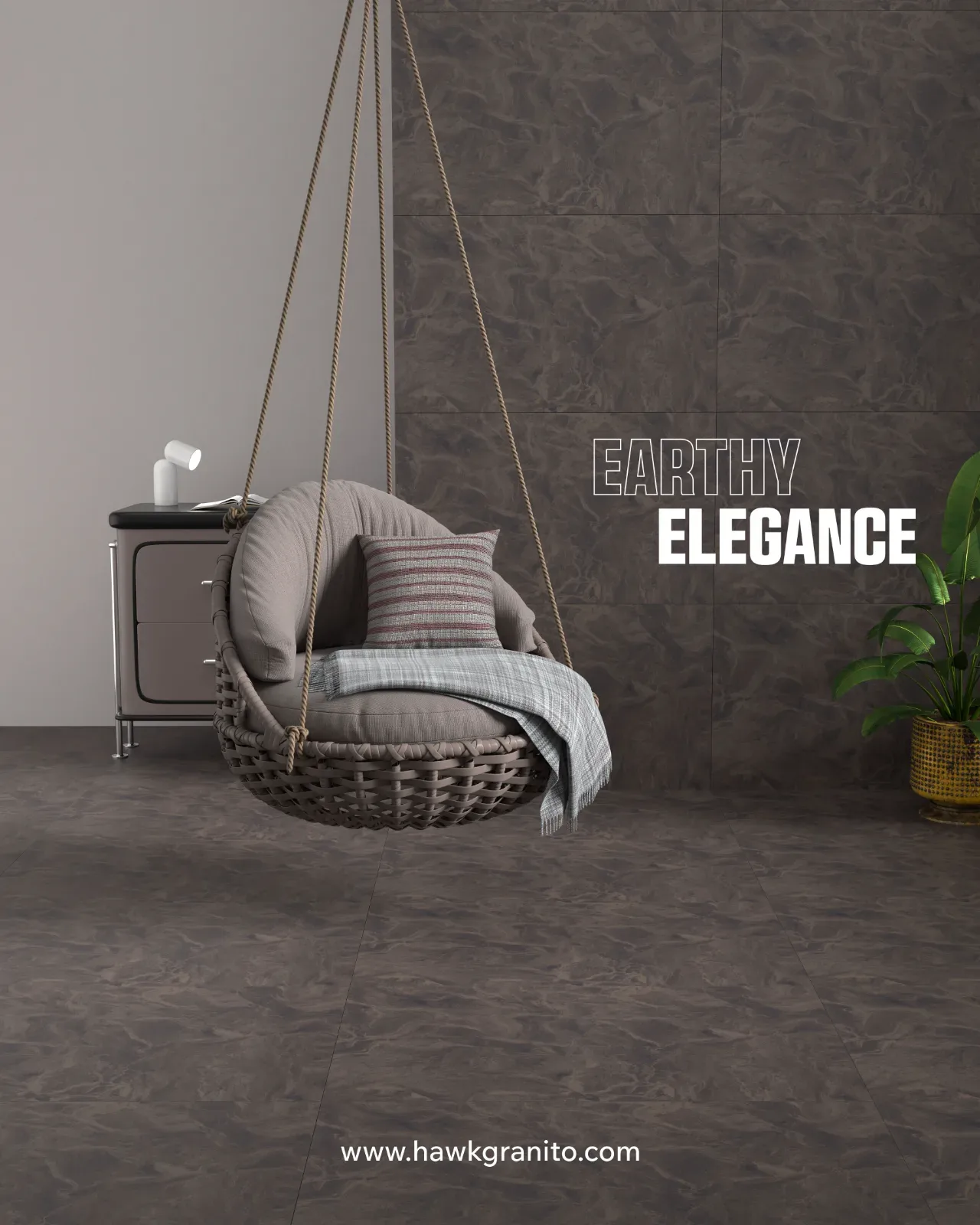
- Formats to 1200x2400 mm
- Book-matched marble effects for feature walls
- Countertop, cladding and floor applications
Slab formats
Sizes
- 800x1600 mm
- 1200x1800 mm
- 1200x2400 mm
- 900x1800 mm
Thickness
- 9 mm wall and cladding
- 12 mm floor
- 20 mm countertop
- Mitred edge profiles to order
Finishes
- High gloss polished
- Matt
- Satin
- Structured
Applications
- Feature walls
- Kitchen worktops and islands
- Vanity tops
- External cladding
- Continuous floors
- Lift and door surrounds
Where slabs earn their cost
The obvious case is the feature wall. Two book-matched slabs opened like a butterfly give the effect of a single block of quarried marble, at a fraction of the weight and none of the maintenance. Real marble in a bathroom needs sealing, stains from anything acidic, and etches where water sits. A porcelain slab does none of those things.
The second case is the worktop. A 20 mm porcelain slab takes a hot pan directly, does not scratch under a knife the way a solid surface does, and does not need the annual resealing a natural stone worktop requires. It is also possible to run the same slab from the worktop up the splashback and down the side of an island as a mitred waterfall, so the whole unit reads as one piece of stone.
The third is external cladding, where the combination of large panel size, light weight relative to stone, and total UV stability makes porcelain a straightforward substitute for a ventilated stone facade.
The honest caveat is handling. A 1200x2400 mm slab needs a frame and a team of at least two to move, a cutting setup built for the format, and a perfectly flat substrate. This is a product for a contractor who has fitted large format before — it is not a DIY material.
Frequently asked questions
What are porcelain big slabs used for?
Feature walls, kitchen worktops and islands, vanity tops, external cladding, and floors where an uninterrupted surface is wanted. The common thread is wanting as few joints as possible.
Can a porcelain slab be used as a kitchen worktop?
Yes, in 20 mm. It takes hot pans directly, resists knife scratching, does not stain, and never needs resealing — advantages over both natural stone and composite surfaces. Mitred edges let the slab turn down the side of an island as a waterfall.
How are big slabs shipped?
In purpose-built timber A-frames, secured upright. Slabs are loaded with edge protection and the frames are braced inside the container. Expect a small allowance for transit breakage on any large-format order.
What is book-matching?
Two slabs printed as mirror images of each other. Laid side by side, the veining opens symmetrically like the pages of a book, imitating how a quarried marble block is sawn and unfolded.
Request big slab pricing and shipping details
Slabs ship in braced A-frames. Tell us the format and quantity and we will quote the slabs and the freight together.
Browse the full range
Buying Guides
- Tile Buying Guide
- Full Body vs GVT Tiles
- Step & Riser Tiles Guide
- GVT vs PGVT
- Tile Size Guide
- Laminate Guide
- Porcelain vs Ceramic Tiles
- What Are Vitrified Tiles
- Types of Tiles
- Tile Thickness Guide
+21 more
- Glossy vs Matte Tiles
- How to Clean Tile Floors
- How to Remove Tile Stains
- How to Fix Cracked Tiles
- How to Clean Marble Floors
- Bathroom Size Guide
- Powder Room Guide
- Epoxy Flooring vs Tiles
- Wall Tiles vs Floor Tiles
- Small Bathroom Ideas on a Budget
- How to Clean Kitchen Tiles
- How to Remove Tile Scratches
- Floor Tile Border Designs
- Indian Flooring Tiles
- Indian Toilet Bathroom Design
- Kitchen Dado Tiles
- Wash Basin Counter Design
- Flush Valve vs Flush Tank
- Wall vs Floor Mounted Toilet
- Portico Design
- Outside Stairs Design