
GVT & PGVT Tiles — Glazed and Polished Glazed Vitrified
GVT and PGVT put a high-definition printed surface on a fully vitrified body. That combination is what makes a convincing marble, timber or weathered-concrete floor possible at a price no natural material can match — and at formats large enough that the pattern reads as continuous.
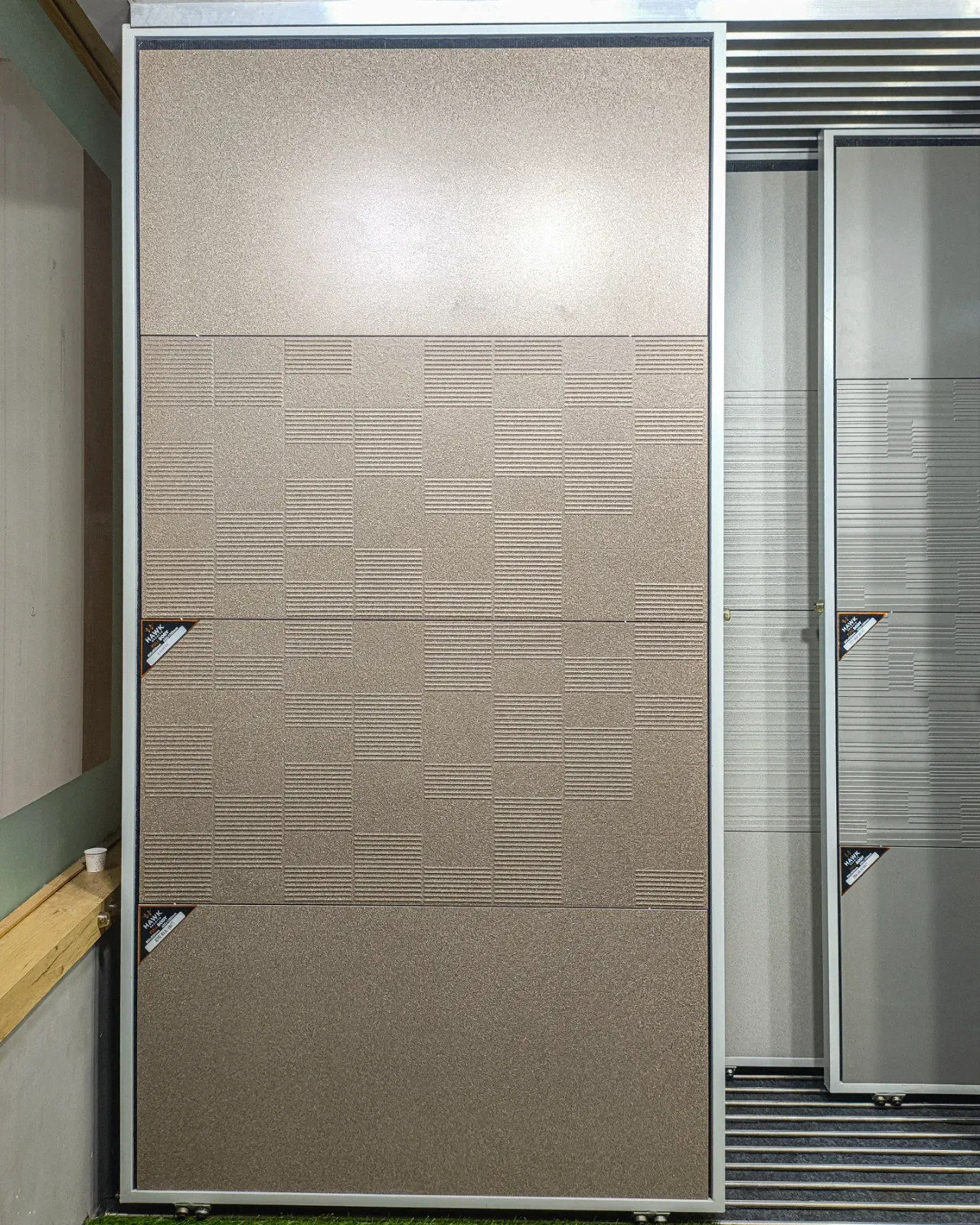
- High-definition digital print, up to 600 dpi
- Glossy (PGVT) and matt or textured (GVT) surfaces
- Rectified edges for grout lines under 2 mm
GVT and PGVT — the difference in one paragraph
Both are glazed vitrified tiles: the body underneath is identical, and both are fired to the same density. The distinction is what happens to the surface after glazing. PGVT is polished, giving a high-gloss, light-reflecting face that makes a room feel larger and brighter. GVT is left as fired — matt, satin, textured, carved or sugar finish — which hides footmarks and scuffing far better and gives usable slip resistance.
That points each at a different room. PGVT belongs in living rooms, showrooms, hotel lobbies and anywhere the reflection is the point. GVT belongs in kitchens, bathrooms, balconies and commercial circulation, where a polished floor would be both slippery and a magnet for every smear.
Neither is intended for the very heaviest traffic. The printed layer is thin, so on an airport concourse or a factory floor it will eventually abrade. That is the job of full body or double charged tiles — the design range is narrower, but nothing wears through.
Technical specification
Sizes
- 600x600 mm
- 600x1200 mm
- 800x800 mm
- 800x1600 mm
- 1200x1800 mm
- 200x1200 mm plank
Finishes
- High gloss (PGVT)
- Matt (GVT)
- Satin / soft matt
- Carving and textured
- Sugar finish
- Rustic
Design Families
- Marble and book-matched marble
- Wood plank and parquet
- Natural stone and slate
- Cement and concrete
- Terrazzo
- Solid and fabric effects
Performance
- Water absorption < 0.5%
- Rectified edges
- Shade-matched batches
- PEI III-IV surface rating
What digital printing makes possible
- Face variation — a run is printed from dozens of different faces, so the same veining does not repeat across a floor the way it did on older screen-printed tiles.
- Book-matching — marble designs printed as mirrored pairs, so two slabs open like a book across a feature wall.
- Through-edge printing — the design continues onto the ground edge on large formats, so the joint between tiles reads as a vein rather than a seam.
- Texture registered to print — the surface relief follows the printed grain, so a timber-look tile feels like timber under the hand, not like a photograph.
- Large format — at 800x1600 mm and above, a room needs so few tiles that the pattern reads as one continuous surface.
Choosing between PGVT and GVT by room
| Room | Recommended | Why |
|---|---|---|
| Living room | PGVT gloss | Reflection makes the space read larger and brighter |
| Bedroom | PGVT or satin GVT | Low traffic, appearance leads |
| Kitchen | Matt GVT | Grease and water make a polished floor genuinely dangerous |
| Bathroom floor | Textured GVT | Wet slip resistance is the governing requirement |
| Balcony and terrace | Textured GVT | Rain exposure plus slip resistance |
| Hotel lobby | PGVT gloss | High-impact appearance, traffic is mostly pedestrian |
| Shop or office floor | Matt GVT | Hides scuffing, needs less frequent polishing |
Frequently asked questions
What is the difference between GVT and PGVT?
Both are glazed vitrified tiles with the same body. PGVT is polished after glazing for a high-gloss reflective surface; GVT is left matt, satin or textured. PGVT looks brighter, GVT is less slippery and hides marks better.
Can GVT tiles genuinely look like marble?
Yes. Printing at high resolution from many different faces reproduces marble veining convincingly, and large formats mean few enough grout lines that the pattern is not constantly interrupted. Book-matched pairs are available where a mirrored feature wall is wanted.
Are GVT tiles suitable for a bathroom floor?
A textured or matt GVT is, and is a common choice. A polished PGVT is not: a wet gloss surface is slippery. For bathrooms specify a textured finish, and for a shower floor use a smaller format so the falls can be laid properly.
How long do GVT tiles last on a floor?
In a house, decades — domestic traffic is nowhere near enough to abrade the glaze. In a busy commercial space the printed layer will eventually show wear in the traffic lines, which is why shopping centres and airports are specified in full body or double charged instead.
What does rectified mean?
The fired tile is mechanically ground to an exact size with a perfectly square edge. That allows grout joints of 2 mm or less, so large-format floors read as a continuous surface instead of a grid.
Request the GVT & PGVT catalogue
Tell us the sizes and design families you are interested in and we will send the current catalogue with container pricing.
Browse the full range
Buying Guides
- Tile Buying Guide
- Full Body vs GVT Tiles
- Step & Riser Tiles Guide
- GVT vs PGVT
- Tile Size Guide
- Laminate Guide
- Porcelain vs Ceramic Tiles
- What Are Vitrified Tiles
- Types of Tiles
- Tile Thickness Guide
+21 more
- Glossy vs Matte Tiles
- How to Clean Tile Floors
- How to Remove Tile Stains
- How to Fix Cracked Tiles
- How to Clean Marble Floors
- Bathroom Size Guide
- Powder Room Guide
- Epoxy Flooring vs Tiles
- Wall Tiles vs Floor Tiles
- Small Bathroom Ideas on a Budget
- How to Clean Kitchen Tiles
- How to Remove Tile Scratches
- Floor Tile Border Designs
- Indian Flooring Tiles
- Indian Toilet Bathroom Design
- Kitchen Dado Tiles
- Wash Basin Counter Design
- Flush Valve vs Flush Tank
- Wall vs Floor Mounted Toilet
- Portico Design
- Outside Stairs Design