
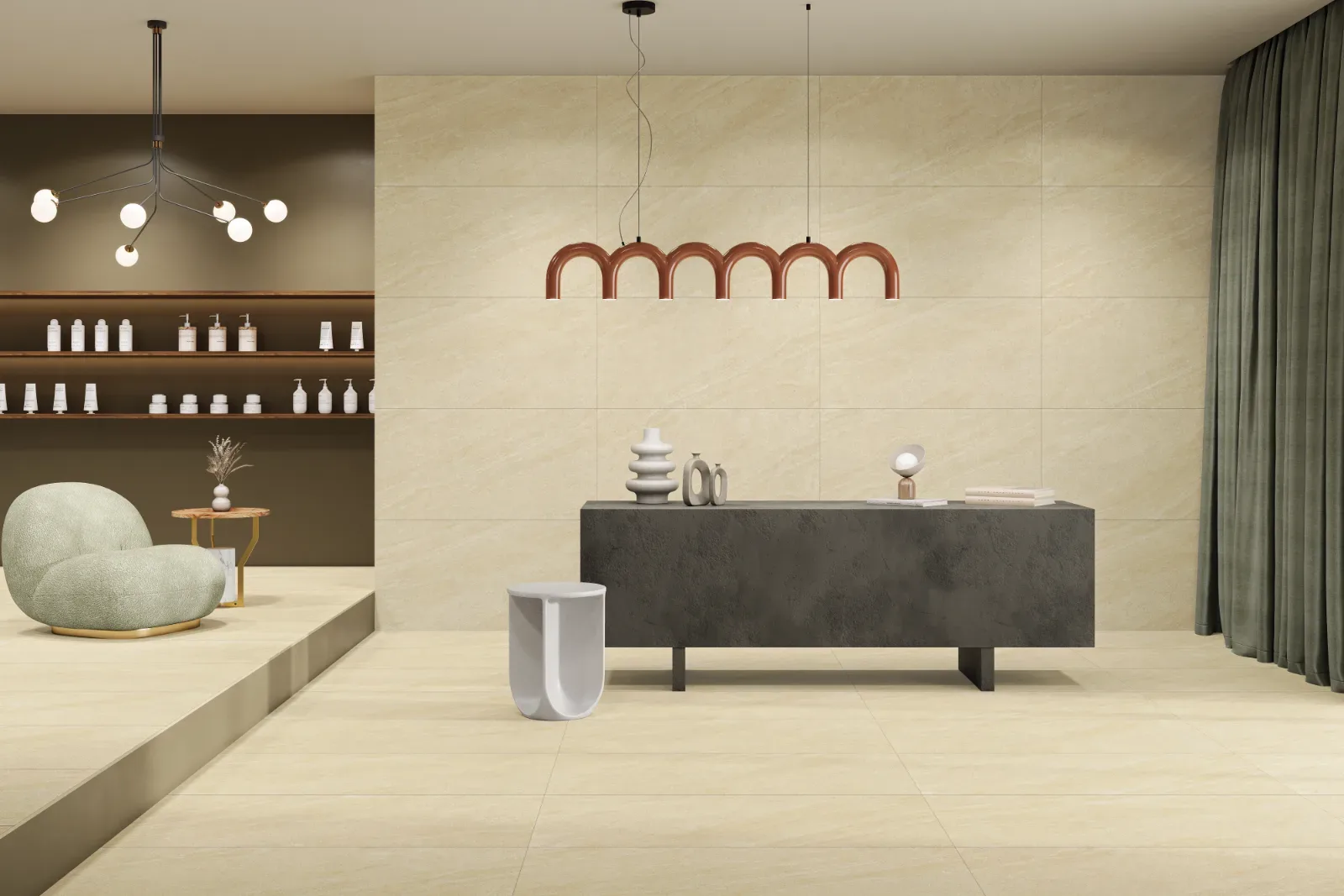
Full body tiles have become a popular choice for modern residential, commercial, and high-traffic spaces because of their durability, consistent appearance, and ability to withstand heavy use. Unlike conventional glazed tiles, full body tiles are designed so that the colour and material run throughout the entire thickness of the tile. Whether you are planning a home, office, showroom, hotel, commercial building, or outdoor space, understanding full body tiles can help you make a better flooring decision. What Are Full Body Tiles? Full body tiles are tiles in which the colour, pattern, and material composition extend through the entire thickness of the tile. This means that if the surface of the tile becomes chipped, scratched, or worn over time, the underlying material is similar in appearance to the surface. This characteristic makes full body tiles particularly suitable for areas where flooring experiences heavy foot traffic. How Are Full Body Tiles Different from Glazed Tiles? The main difference is the construction of the tile. A glazed tile generally has a decorative glaze layer on top of the tile body. The glaze provides the colour, pattern, and surface finish. In a full body tile, the material and colour are distributed throughout the body of the tile. Feature Full Body Tiles Glazed Tiles Colour throughout body Yes Usually no Surface glaze Generally no Yes Resistance to visible wear Very high Depends on glaze Heavy-traffic suitability Excellent Good to excellent Design variety Moderate to high Very high Commercial applications Excellent Good Maintenance Easy Easy
Key Benefits of Full Body Tiles 1. Excellent Durability One of the biggest advantages of full body tiles is their durability. They are manufactured to handle significant foot traffic and regular wear. This makes them suitable for locations such as: - Shopping malls - Airports - Hotels - Offices - Restaurants - Schools - Hospitals - Retail stores - Industrial and commercial buildings For areas that receive thousands of visitors, choosing a durable flooring material can significantly reduce maintenance and replacement requirements. 2. Better Resistance to Wear Flooring in high-traffic areas can gradually lose its appearance due to constant walking, furniture movement, and cleaning. Because the material extends through the tile body, wear is generally less visually noticeable compared with tiles where the decorative appearance is concentrated primarily on the surface. This is one of the reasons full body tiles are commonly considered for commercial flooring. 3. Suitable for High-Traffic Areas Full body tiles are particularly useful where durability is more important than simply achieving a decorative appearance. For example, a residential bedroom may not require the same level of durability as a hotel lobby or shopping centre. Full body tiles can therefore be a practical choice for: High traffic → Commercial buildings → Public spaces → Retail environments → Heavy-use flooring 4. Low Maintenance Full body tiles are relatively easy to clean and maintain when installed correctly. Routine maintenance generally involves: - Sweeping or vacuuming - Mopping - Removing spills promptly - Using suitable tile cleaning products - Periodic deep cleaning where necessary Their hard surface also makes them resistant to many forms of everyday wear. 5. Long-Term Value Although the initial price of a high-quality full body tile may be higher than some basic flooring options, durability can make it economical over the long term. A flooring material that lasts longer and requires fewer repairs or replacements can reduce overall maintenance costs. Where Can Full Body Tiles Be Used? Full body tiles are versatile and can be used in many environments. Residential Spaces They can be used in: - Living rooms - Kitchens - Hallways - Balconies - Staircases - Entrances - Utility areas For homes, however, the choice should also consider appearance, comfort, texture, slip resistance, and design preferences. Commercial Spaces Full body tiles are particularly suitable for: - Shopping malls - Retail stores - Offices - Hotels - Restaurants - Showrooms - Banks - Airports - Educational institutions These environments typically experience significantly higher foot traffic than residential spaces. Outdoor Areas Certain full body tiles can also be used in outdoor applications, depending on their technical specifications. For outdoor use, it is important to consider factors such as: - Water absorption - Slip resistance - Surface texture - Weather exposure - Frost resistance where applicable - Tile thickness Not every full body tile is automatically suitable for outdoor installation. Full Body Tiles vs Vitrified Tiles The terms full body and vitrified are sometimes used interchangeably, but they describe different characteristics. Vitrification refers to the manufacturing process and resulting properties of the tile, particularly its low porosity and dense structure. Full body refers to the composition and appearance of the tile throughout its thickness. Therefore, a tile can be vitrified and have a full-body construction. This distinction is important when comparing tile specifications. What Sizes Are Available? Full body tiles are available in different sizes depending on the manufacturer and intended application. Common formats can include: - 300 × 300 mm - 300 × 600 mm - 600 × 600 mm - 600 × 1200 mm - Larger formats for specific architectural applications The ideal size depends on the room dimensions, design requirements, installation method, and expected traffic. Larger tiles can create a cleaner, more spacious appearance because they require fewer grout joints, while smaller formats can be useful for particular layouts and applications. How to Choose the Right Full Body Tile Before purchasing full body tiles, don't focus only on colour and appearance. Consider the technical specifications as well. 1. Check Water Absorption Lower water absorption generally indicates a denser tile. For demanding applications, check the manufacturer's technical specifications rather than relying only on the term "full body." 2. Consider Slip Resistance For bathrooms, entrances, kitchens, commercial spaces, and outdoor areas, slip resistance is particularly important. A highly polished surface may look attractive but may not be appropriate for every location. 3. Choose the Correct Finish Full body tiles can have different finishes, including: - Matt - Polished - Honed - Structured - Natural - Textured The finish should match the intended application. 4. Consider PEI and Wear Requirements For glazed tiles, PEI ratings are commonly used to indicate resistance to surface wear. For full body and porcelain products, however, buyers should consider the complete technical specification and the manufacturer's recommended application rather than relying on PEI alone. 5. Check Tile Thickness Thickness can be an important consideration, particularly for heavy-duty commercial applications. Always select a product appropriate for the expected load and installation conditions. Are Full Body Tiles Better Than Regular Tiles? There isn't one tile that is best for every application. Full body tiles are particularly advantageous when durability, wear resistance, and heavy-traffic performance are priorities. However, glazed tiles can provide considerably more design flexibility, including realistic representations of: - Marble - Wood - Stone - Concrete - Travertine - Decorative patterns For a luxury residential interior where appearance is the primary consideration, a high-quality glazed porcelain or vitrified tile may be a better choice. For a busy commercial environment where long-term durability is critical, full body tiles can be an excellent option.