
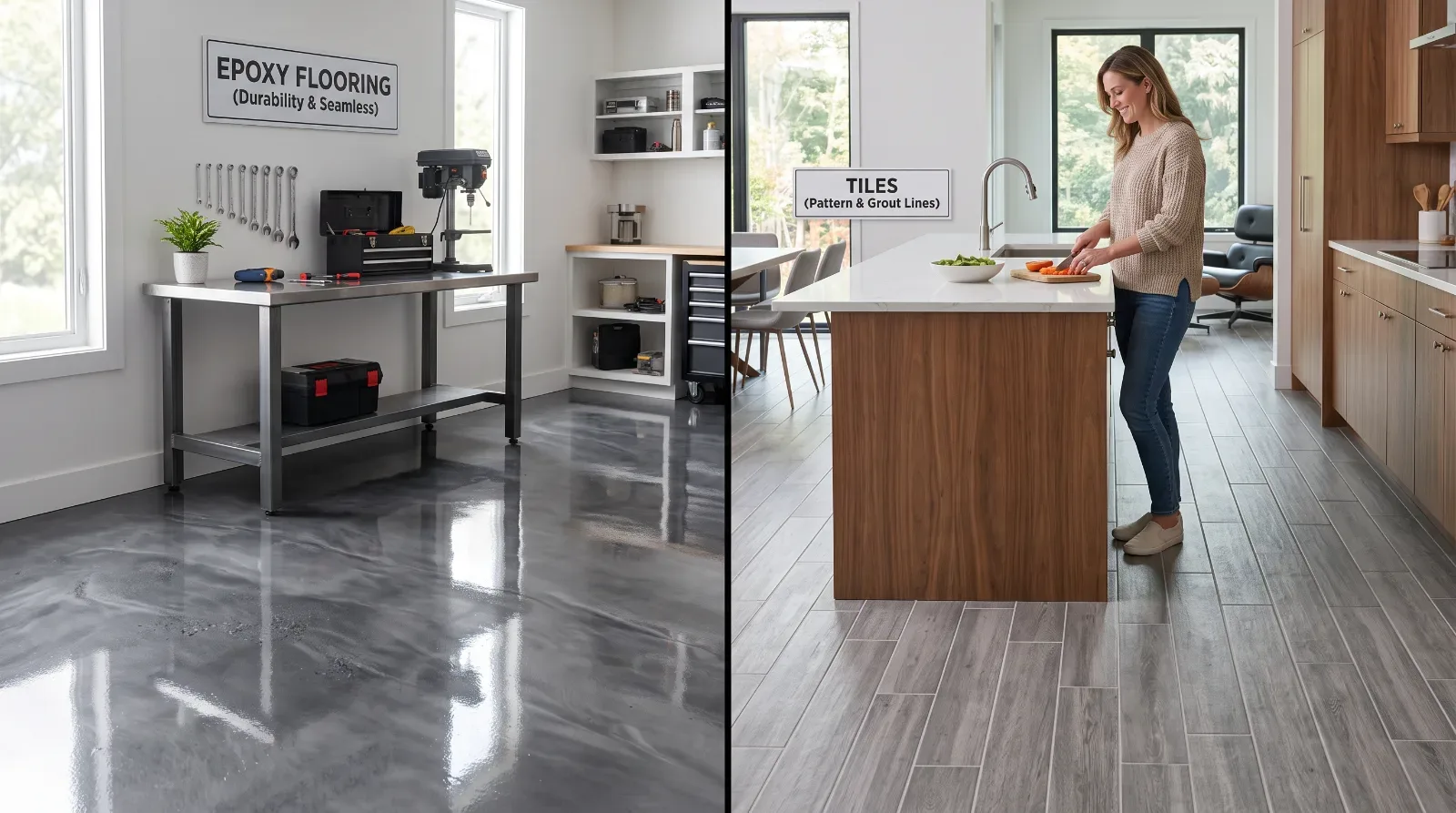
Epoxy Flooring vs Tiles: Which Is Cheaper and Better?
Epoxy flooring has moved from factories into homes, cafés and showrooms, and many buyers now ask whether it's a better choice than tiles. The short answer is that it depends on where the floor is and how it will be used. Here is a side-by-side comparison.
What is epoxy flooring?
Epoxy is a resin coating poured or rolled over a concrete floor. It hardens into a seamless, glossy (or matte) surface with no joints. It comes in basic coatings, self-levelling floors, metallic finishes and 3D decorative designs.
What are vitrified tiles?
Vitrified tiles are ceramic tiles fired at very high temperatures, which makes them dense, hard and almost non-porous. The main types are double-charge, GVT/PGVT and full-body tiles, and each suits a different level of traffic and design.
Epoxy flooring vs tiles: cost Option Material + application (per sq ft) Basic epoxy coating ₹40–70 Self-levelling epoxy ₹70–120 Metallic epoxy ₹130–300 3D / decorative epoxy ₹250–650+ Double-charge vitrified tiles ₹65–110 (tile) + ₹45–85 (laying) GVT / PGVT tiles ₹75–160 (tile) + ₹45–85 (laying) Full-body vitrified tiles ₹95–180 (tile) + ₹45–85 (laying)
Is epoxy flooring cheaper than tiles? A basic epoxy coating is cheaper than most tiled floors. A decorative self-levelling or metallic epoxy floor usually costs the same as, or more than, a good vitrified tile floor. The epoxy price also assumes the concrete base is already sound. If it needs repair or levelling, the cost goes up.
Side-by-side comparison Factor Epoxy flooring Vitrified tiles Look Seamless, modern, industrial Wide range: marble, wood, stone, concrete looks Joints None, so nothing to trap dirt Grout lines (thin with rectified tiles) Scratch resistance Scratches with furniture and grit over time Very high, especially full-body tiles Sunlight / UV Can yellow in direct sun Colour does not fade Repair Damage usually means recoating a large area A single broken tile can be replaced Moisture from below Can peel if the slab is damp Not affected when laid properly Lifespan A well-installed floor lasts years; a poorly installed one can peel in 1–2 years 20+ years with normal care Installation time Several days including curing 2–4 days for a typical room Resale perception in India Seen as niche Widely expected and accepted When epoxy flooring makes sense Factories, warehouses and workshops Commercial kitchens, labs and pharma units that need a joint-free, hygienic floor Parking basements and garages Industrial-look cafés or studios where the seamless look is the point When tiles are the better choice Homes: bedrooms, living rooms and kitchens, where comfort, design choice and long life matter most Areas with sunlight: balconies, verandas and rooms with large windows, where epoxy can yellow Ground floors with damp slabs: tiles cope far better with moisture from below Shops, offices and showrooms: high foot traffic with chairs and trolleys suits scratch-resistant full-body or GVT tiles Budget planning: replacing one damaged tile is simpler and cheaper than recoating an epoxy floor The verdict
For most Indian homes and commercial interiors, vitrified tiles offer better long-term value. They cost about the same as a decorative epoxy floor, but they resist scratches and sunlight far better, and repairs are easy. Epoxy is the right tool for industrial, hygienic and seamless-look spaces where its strengths matter more than its weaknesses.
Compare our full-body vitrified tiles, GVT/PGVT tiles and concrete-effect tiles, which give you the industrial epoxy look without the upkeep.