
Pavement Tiles — Paver and Parking Tiles for Driveways, Porches and Paths
A pavement tile has to take what an indoor floor never meets: car tyres, monsoon rain, oil drips, sun and grit. The right one depends mostly on whether vehicles will drive on it and what it is laid on.
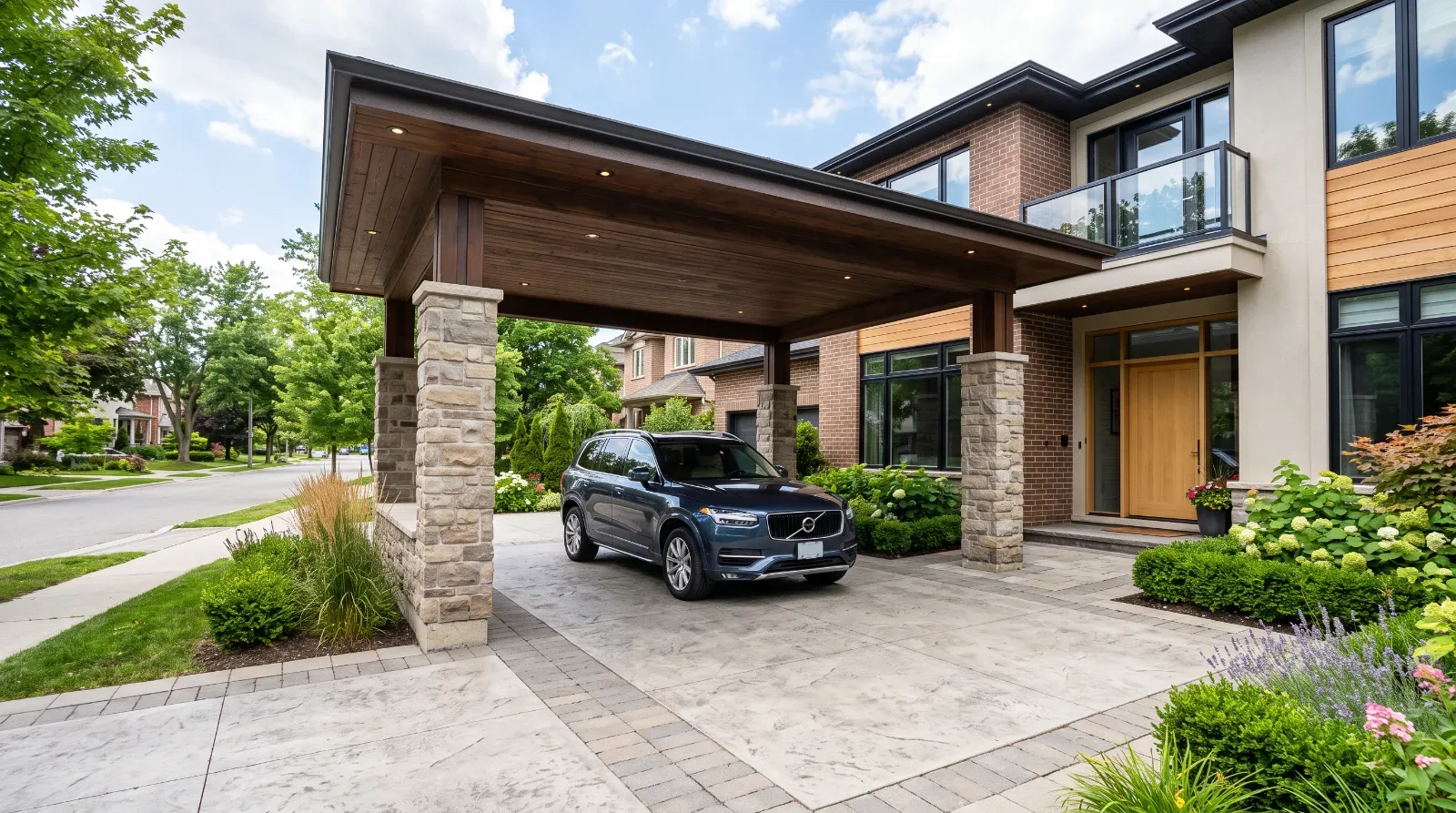
- 20 mm porcelain pavers strong enough for a domestic car
- R11 and R12 anti-skid surfaces for wet driveways
- Does not absorb oil or fade in sun
Types of pavement tiles compared
| Type | Thickness | Laid on | Best for |
|---|---|---|---|
| Concrete interlocking pavers | 60-80 mm | Compacted sand bed | Roads, heavy vehicles, large yards |
| Cement chequered tiles | About 20-25 mm | Mortar on concrete | Budget parking and paths |
| Vitrified parking tiles | About 12-15 mm | Adhesive on concrete | Home car porch and parking |
| Porcelain pavers | 20 mm | Concrete, gravel, sand or pedestals | Driveways, terraces, garden paths |
| Natural stone | 20-40 mm | Mortar on concrete | Premium driveways; needs sealing |
Our paver specification
Thickness
- 20 mm structural paver
- 12 mm heavy pedestrian
- 9-10 mm for bonded paths
Surfaces
- Textured anti-skid (R11)
- Structured grip (R12)
- Riven stone effect
- Grooved step nosing
Sizes
- 600x600 mm
- 400x800 mm paver
- 600x1200 mm
- 300x1200 mm step
Performance
- Water absorption < 0.5%
- Oil and stain resistant
- UV stable — no fading
- Frost resistant
Car parking and porch design ideas for home
- Two-tone parking bay — A dark border framing a lighter field marks the parking area and hides tyre marks at the edges.
- Wheel-track strips — Paver strips where the wheels run, with grass or pebbles between — greener and cooler.
- Stone-effect pavers with a border — Riven or sandstone-look pavers give a natural driveway without real stone's sealing.
- Herringbone or basket-weave — Rectangular 400x800 mm pavers laid in a pattern for a classic look.
- Matching steps and porch — The car porch, entrance steps and portico floor in one shade and one range.
- Drainage channel at the gate — A slot drain across the entrance stops rain running into the porch.
- Grooved ramp at the gate — Extra grip where the driveway slopes up from the road.
What a parking floor actually needs
The base matters more than the tile. For bonded tiles, the car parking area needs a compacted sub-base and a concrete slab; the tile is fixed to the concrete with an external-grade C2 adhesive and full coverage, with no hollow spots for a tyre to crack. A tile laid on a weak base or on mortar dabs will crack along the wheel line, whatever its thickness.
Thickness follows from how the tile is supported. On a sound concrete slab, a 12-15 mm heavy-duty tile carries a domestic car. Dry-laid on gravel or sand with no slab, only a 20 mm porcelain paver has the strength to span the small voids beneath it.
Give the surface a fall of about 1 in 60 to 1 in 80 towards a drain or the road, and leave movement joints every 3-4 metres and at the edges. Choose a textured R11 finish — polished tiles and polished granite are dangerous on a wet driveway. Unlike concrete pavers, porcelain does not absorb oil, so a drip from a car wipes off instead of leaving a permanent stain.
વારંવાર પૂછાતા પ્રશ્નો
Which tiles are best for car parking?
Textured anti-skid tiles rated R11, either heavy-duty vitrified parking tiles of about 12-15 mm on a concrete slab, or 20 mm porcelain pavers. Avoid polished tiles and polished granite, which are slippery when wet.
What thickness of paver tile is needed for cars?
On a solid concrete slab, a 12-15 mm heavy-duty tile is enough for a domestic car. Laid on gravel, sand or pedestals without a slab, use 20 mm porcelain pavers.
Are porcelain pavers better than concrete pavers?
For homes, usually. Porcelain pavers do not absorb oil, do not fade, resist moss and come in far more designs. Concrete interlocking pavers are cheaper per square metre and better for roads and heavy vehicles.
What is the size of pavement tiles?
Porcelain pavers are commonly 600x600 mm, 400x800 mm and 600x1200 mm at 20 mm thick. Vitrified parking tiles are usually 300x300 mm or 400x400 mm. Concrete interlocking pavers are smaller units, 60-80 mm thick.
Can outdoor pavers be laid on sand?
Only 20 mm porcelain pavers, on a compacted sub-base with a levelled sharp sand or grit bed. Thinner tiles laid on sand crack under the first point load.
Request paver and parking tile pricing
Tell us the area, what it is laid on and whether cars will drive on it. We will recommend a thickness and surface and quote it.
સંપૂર્ણ શ્રેણી જુઓ
ખરીદી માર્ગદર્શિકા
- ટાઇલ ખરીદી માર્ગદર્શિકા
- ફુલ બોડી વિરુદ્ધ GVT ટાઇલ્સ
- સ્ટેપ અને રાઇઝર ટાઇલ માર્ગદર્શિકા
- GVT વિરુદ્ધ PGVT
- ટાઇલ સાઇઝ માર્ગદર્શિકા
- લેમિનેટ માર્ગદર્શિકા
- પોર્સેલિન વિરુદ્ધ સિરામિક ટાઇલ્સ
- વિટ્રિફાઇડ ટાઇલ્સ શું છે
- ટાઇલ્સના પ્રકાર
- ટાઇલ જાડાઈ માર્ગદર્શિકા
+21 વધુ
- ગ્લોસી વિરુદ્ધ મેટ ટાઇલ્સ
- ટાઇલ ફ્લોર કેવી રીતે સાફ કરવું
- ટાઇલના ડાઘ કેવી રીતે દૂર કરવા
- તૂટેલી ટાઇલ કેવી રીતે બદલવી
- માર્બલ ફ્લોર કેવી રીતે સાફ કરવું
- બાથરૂમ સાઇઝ માર્ગદર્શિકા
- પાઉડર રૂમ માર્ગદર્શિકા
- Epoxy Flooring vs Tiles
- Wall Tiles vs Floor Tiles
- Small Bathroom Ideas on a Budget
- How to Clean Kitchen Tiles
- How to Remove Tile Scratches
- Floor Tile Border Designs
- Indian Flooring Tiles
- Indian Toilet Bathroom Design
- Kitchen Dado Tiles
- Wash Basin Counter Design
- Flush Valve vs Flush Tank
- Wall vs Floor Mounted Toilet
- Portico Design
- Outside Stairs Design